

Automation with written rules, AI where there is judgment
We automate the operation's repetitive work with explicit, auditable rules, and apply AI where the task requires interpretation, not just execution. No autonomous-agent promise: autonomy is granted in stages, with written limits and an audit trail.
The signs that it is time
The team spends hours moving data from one system to another
Somebody exports, somebody retypes, somebody reconciles at month-end. That is salary paid to transport information, and it is the first candidate for a written rule.
Approvals cross three people and two chat groups
The request sits in the inbox of whoever is traveling, and nobody knows which stage it is in. An approval flow is a process with a clear rule, exactly where automation works best.
Recurring reports consume somebody's days every month
Collecting, checking and formatting the same report every cycle is machine work. The person's time should go to the analysis, not the assembly.
You want to use AI, but nobody defined where it decides
The right question is not which tool, it is how much autonomy: where AI decides alone, where it suggests for someone to confirm, and where it only classifies. That boundary is an architecture decision.
Four stages, autonomy last
The same stages as every Yowpi project, applied to the operation's repetitive work.
01
Diagnostic
We map the repetitive work and measure what it costs in hours. And we separate what a written rule solves from what requires judgment, because the tool comes after that distinction.
02
Architecture
We design the automated flow with exception paths, autonomy limits and an audit trail. AI enters with a defined role: it decides, suggests or only classifies.
03
Implementation
We automate one flow at a time, with the manual process running in parallel until the number proves it can be switched off.
04
Evolution
Automation without an owner degrades: business rules change, integrations break. Every delivered routine has an owner, monitoring and versioned documentation.
Automation running inside systems we built
On UniTrust's platform, the commissions of thousands of agents are calculated automatically on every paid policy, with no manual calculation in the loop. In Reatop, the system we built for Bumerangue, the dashboard produces audit and ESG reports in seconds. Before it, operational decisions ran on reports that were weeks out of date.
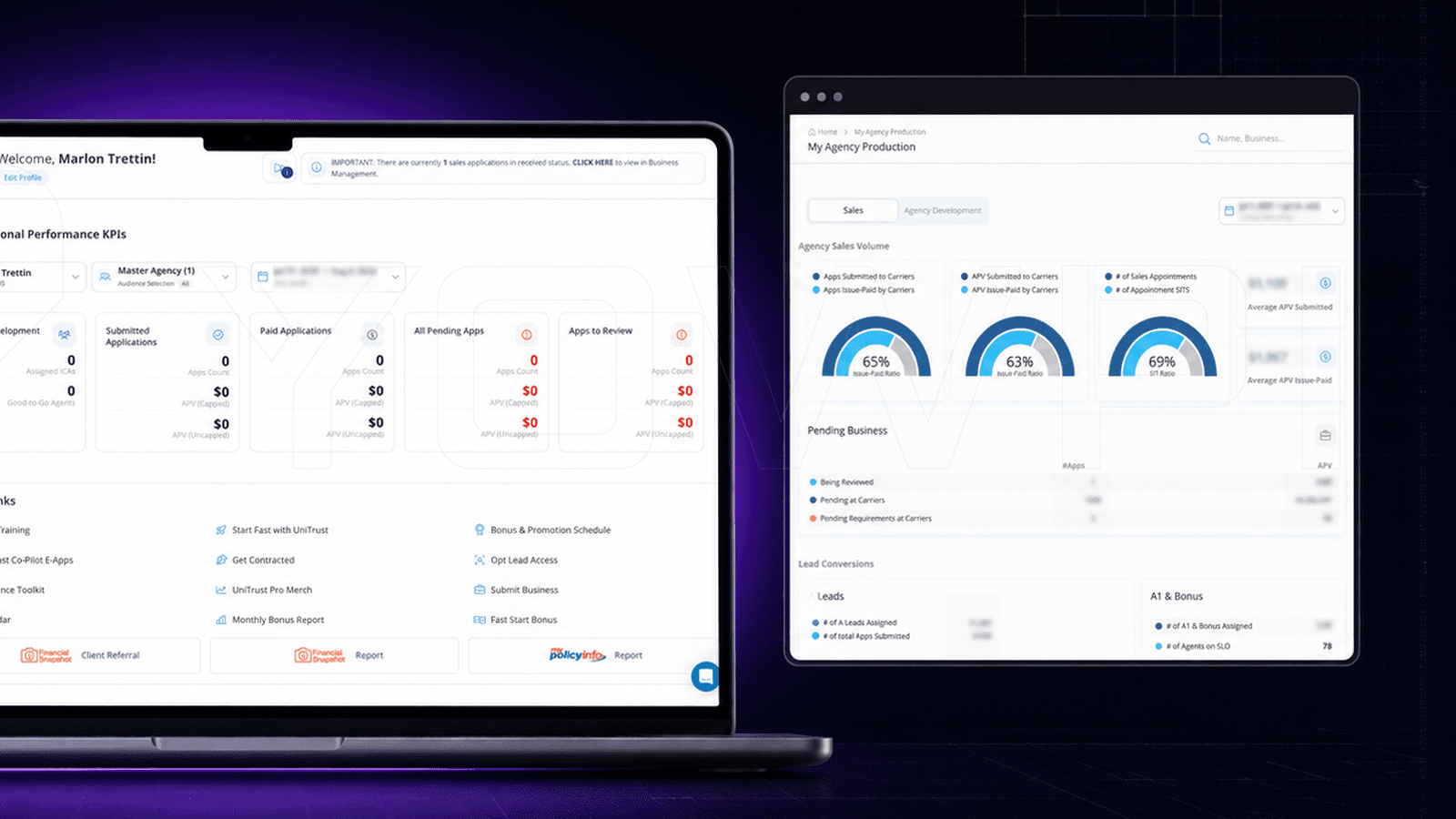
Management system for a US insurance IMO
How UniTrust has scaled policy, agent, and commission management since 2022: from a system launched in two weeks to the migration to Next.js on Azure.
Before: Founders breaking away from their previous IMO, with two weeks to get a system live before the operation stalled.
After: An ecosystem covering the agent's full lifecycle: licensing, leads, scheduling, policies, and recruiting.
Result: A unified operation for over 8,000 users, now migrating to Next.js on Azure with Yowpi on the team.
8k+
Active users on the platform
2 weeks
From zero to a live system in 2022
2026
Migration to Next.js on Azure underway
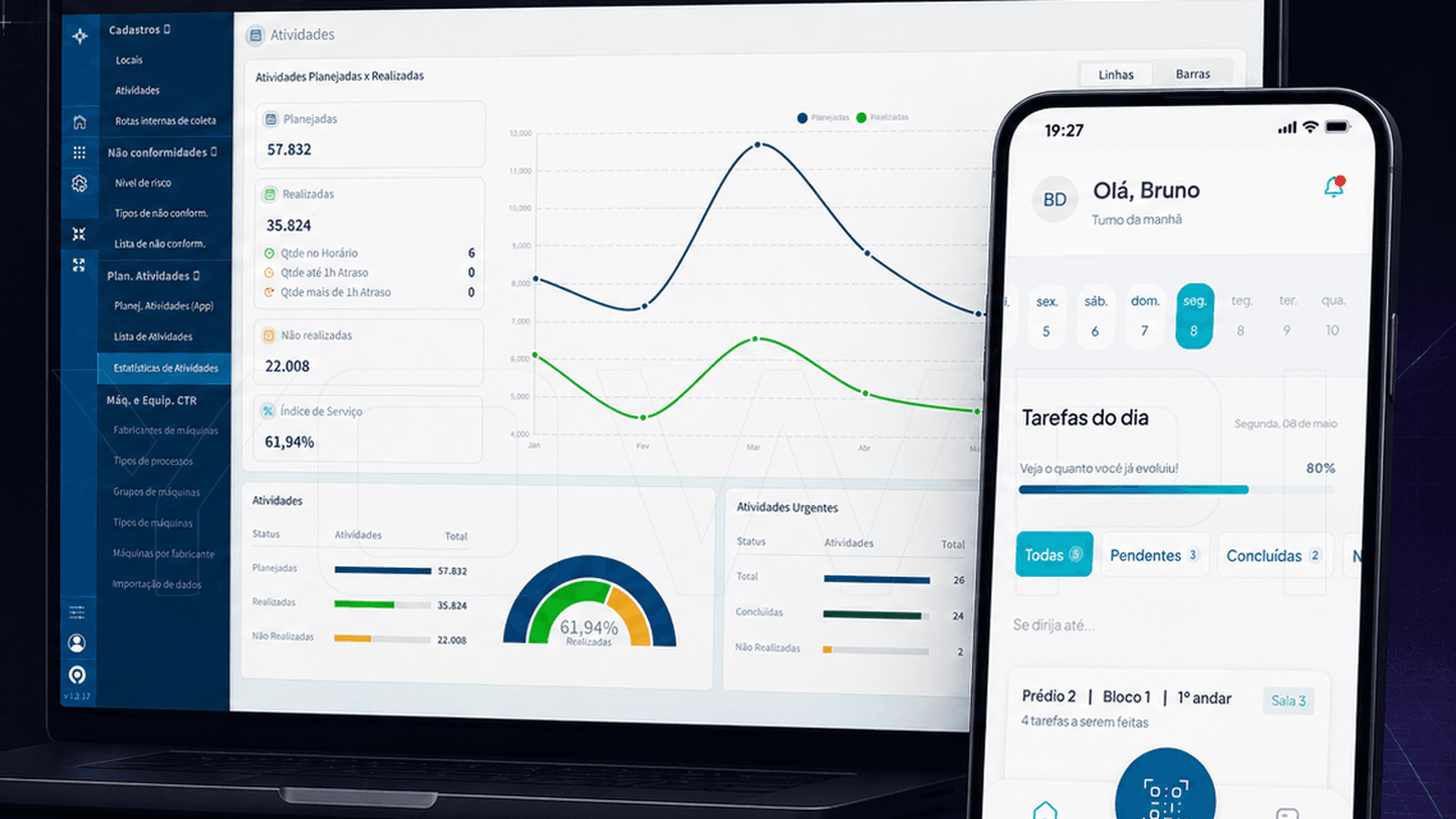
Environmental management and waste control system for hospitals
How Bumerangue digitized hospital waste control with the Reatop platform, an integrated ecosystem of back office + native mobile app that works offline.
Before: Fragmented hospital waste control based on spreadsheets and error-prone paper records.
After: A complete ecosystem with a native mobile app that works offline and a real-time management dashboard.
Result: Over 5,000 tons of hospital waste tracked and processed safely every month.
5k+ tons
Waste processed/month
100%
Responsive
Offline
Native mobile app
The autonomy question is answered in detail in the guide AI in operations: how much autonomy to grant
What we say before you sign
Automation has limits and a maintenance cost. These are the ones we declare in every proposal.
Not every process is worth automating
Low volume, unstable rules or frequent exceptions make automation more expensive than the manual work. The diagnostic measures first: hours spent, frequency and exception rate.
AI makes mistakes, and the design assumes it
Where there is judgment, AI suggests and a person confirms, until the track record proves it can be loosened. A fully autonomous agent from day one is not a promise we make.
Automation requires maintenance
Business rules change, a third-party API breaks, volume doubles. An automated routine without an owner and monitoring becomes a silent incident, so every delivery ships with both.
What everyone asks
- Where should we start automating?
- With the repetitive flow that consumes the most hours and has the fewest exceptions. The diagnostic measures both before any proposal: hours spent and exception rate. The first automated flow is what produces the number to decide whether the second one is worth it.
- Will the AI decide on its own?
- Only where you define it, and with written limits. The default is to start with AI suggesting and a person confirming; autonomy grows in stages, with an audit trail on every decision.
- What if the automation breaks?
- It will fail at some point, like all software. The difference is in the design: monitoring that alerts before users notice, a documented manual path for contingency, and an owner with a maintenance budget.
Start with the cost of the repetitive work, not the tool
The Operational Architecture Diagnostic is a 30-minute conversation with Yowpi's founder to map the operation's repetitive work, what it costs in hours and where automation starts. We take on up to 6 projects in parallel and work US East hours, with the technical owner in every meeting.
Talk directly with the architect who will run the project. No salespeople.